Science
Intent
At Barford Primary School, our science curriculum is ambitious, knowledge-rich and designed to inspire curiosity about the world around us. Following the CUSP Science curriculum, pupils develop a secure understanding of biology, chemistry and physics through carefully sequenced learning that builds progressively from the Early Years to Year 6.
Our curriculum enables pupils to think and work scientifically by asking questions, making observations, planning investigations, recording evidence and drawing conclusions using scientific knowledge. Scientific vocabulary is explicitly taught and revisited throughout every unit, enabling pupils to communicate their understanding with increasing confidence and precision.
By making meaningful links between previous learning and new scientific concepts, pupils develop secure substantive knowledge alongside the disciplinary knowledge needed to work and think like scientists. We aim to develop pupils who are curious, analytical and equipped with the scientific understanding needed to make sense of the ever-changing world around them, preparing them well for the scientific demands of secondary education and future careers in STEM.
Implementation
Science is taught through the CUSP Science curriculum, which has been carefully sequenced to ensure knowledge builds progressively over time. New learning is deliberately connected to prior knowledge, allowing pupils to strengthen their understanding and make meaningful links between concepts as they move through the school.
Every science lesson begins by identifying the substantive concept being studied—Biology, Chemistry or Physics. By explicitly identifying the discipline of science pupils are learning, children begin to understand that science is made up of distinct but interconnected areas of knowledge. This develops a deeper understanding of how scientific concepts are organised and prepares pupils for the subject-specific approach they will encounter at secondary school.
Alongside the substantive concept, pupils also identify the IPROF scientific enquiry skill that will be developed during the lesson. These enquiry skills are revisited and built upon throughout Years 1 to 6, enabling pupils to progressively become more confident in working scientifically. Whether they are identifying and classifying, pattern seeking, observing over time, comparative and fair testing or researching using secondary sources, pupils understand not only what they are learning but also how scientists investigate the world around them.
Each unit combines substantive knowledge (the scientific facts and concepts pupils need to know) with disciplinary knowledge (how scientists work, investigate and reach conclusions). Practical enquiry is embedded throughout the curriculum, allowing pupils to ask questions, make predictions, observe carefully, collect evidence, analyse results and draw informed conclusions.
Scientific vocabulary is explicitly taught in every lesson. Key vocabulary is introduced, displayed, modelled and revisited regularly, enabling pupils to use scientific language accurately when discussing, explaining and recording their learning. This consistent emphasis on vocabulary develops confidence while ensuring pupils communicate their scientific understanding with increasing precision.
Practical investigations are at the heart of our curriculum. Pupils regularly carry out hands-on enquiries using scientific equipment, allowing them to explore concepts through first-hand experience. Teachers use ongoing assessment to identify misconceptions, adapt learning and ensure every pupil is appropriately supported and challenged while maintaining consistently high expectations.
Impact
By the time pupils leave Barford Primary School, they have developed a secure understanding of biology, chemistry and physics alongside the enquiry skills needed to think and work scientifically. They confidently ask questions, plan investigations, gather and interpret evidence, evaluate findings and communicate conclusions using accurate scientific vocabulary.
Pupils understand how scientific knowledge has developed through enquiry and recognise the importance of science in everyday life. They leave Barford Primary School as curious, resilient and knowledgeable young scientists who are exceptionally well prepared for secondary science and inspired by the possibilities of future STEM pathways.
Science in Action
Science comes to life at Barford Primary School through practical, memorable experiences that inspire curiosity and develop a lifelong love of learning.
Our dedicated Science Laboratory provides pupils with the opportunity to become real scientists. Wearing laboratory coats and using specialist scientific equipment, children carry out exciting investigations in an authentic laboratory environment. This unique experience develops enthusiasm, confidence and independence while allowing pupils to apply the scientific knowledge they have learned in class through hands-on experimentation.
By learning in a specialist science space, pupils experience science as it is practised in the real world, making learning purposeful, engaging and memorable while inspiring aspirations for future scientific careers.
Enrichment
We believe the best science learning extends beyond the classroom, allowing pupils to experience science in authentic and memorable contexts. Our enrichment opportunities are carefully planned to complement classroom learning, deepen understanding and build progressively on prior knowledge as pupils move through the school.
Nursery
Children welcome a visit from a dentist, learning about healthy teeth, oral hygiene and the importance of looking after their bodies. This practical experience introduces children to people who help us in the community while promoting healthy lifestyles from an early age.
Early Years Foundation Stage (Reception)
Children begin their scientific journey through rich, hands-on experiences linked to the Early Learning Goals.
- The Natural World – Children encounter animals firsthand, observe their environments and begin exploring growth, change and simple life cycles.
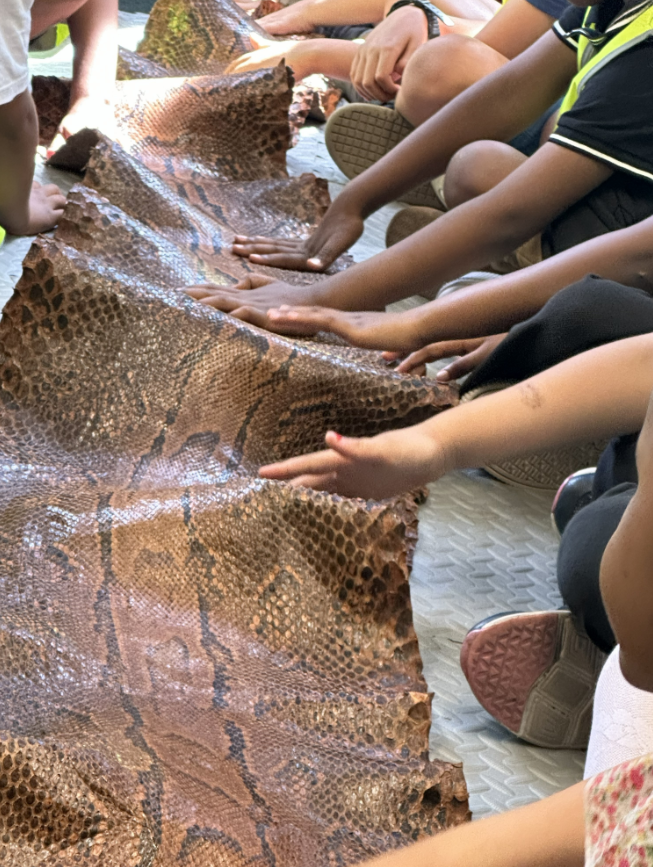
- People, Places and Communities – Visits from local farmers enable children to understand farming as an important role within the community while comparing rural environments with their own local surroundings.
- Processes and Changes – Practical activities such as making butter allow children to observe changes of state as liquid cream transforms into solid butter and buttermilk through physical change.
These experiences ignite curiosity and provide strong foundations for future scientific learning.


Key Stage 1
Learning is carefully sequenced so pupils build upon their previous knowledge.
In Year 1, pupils visit Dudley Zoo, where they identify, observe and classify a wide variety of animals. They explore animal groups and learn the differences between herbivores, carnivores and omnivores, bringing classroom learning to life through first-hand observation.
Building upon this knowledge, Year 2 pupils visit Sutton Park, where they investigate habitats and microhabitats through fieldwork. Having previously learned to identify and classify animals in Year 1, pupils now explore how living things are suited to their environments, investigate food chains and observe plants and animals within their natural habitats. This carefully sequenced progression enables pupils to deepen their understanding while making meaningful connections between scientific concepts across year groups.


Key Stage 2
Throughout Key Stage 2, pupils continue to experience science beyond the classroom through educational visits and specialist workshops that bring learning to life and deepen their understanding of the curriculum.
In Year 4, pupils participate in an Electrifying Science Experience, where they investigate circuits, electrical components and conductors through exciting hands-on investigations linked directly to their Electricity unit. This practical experience enables pupils to apply their classroom learning while developing their scientific enquiry skills through experimentation.
In Year 5, pupils visit the Thinktank Birmingham Science Museum to experience the Planetarium, providing an immersive exploration of the solar system, planetary movement and space. This unforgettable experience enriches their Earth and Space unit, helping pupils visualise concepts that cannot be observed first-hand while inspiring awe and curiosity about the universe.
Also in Year 5, pupils participate in the Make Me an Engineer programme, working alongside engineers to design, build, test and refine solutions to real-world challenges. This inspiring experience develops creativity, resilience, teamwork and problem-solving while demonstrating how science, technology, engineering and mathematics combine to shape the modern world and future careers.
These carefully planned enrichment opportunities strengthen classroom learning, encourage scientific questioning and help pupils understand the relevance of science beyond school, inspiring many to consider future STEM pathways.

Curriculum End Goals
Early Years Foundation Stage (EYFS)
By the end of Reception, children will have developed curiosity about the natural world through observing living things, exploring materials, noticing seasonal changes and discussing similarities and differences in the world around them. They will ask questions, make observations and begin to explain what they notice using simple scientific language, providing secure foundations for Key Stage 1 science.
Key Stage 1
By the end of Key Stage 1, pupils will understand the basic characteristics of animals, plants, humans, everyday materials and seasonal changes. They will identify, compare, classify and observe the world around them while carrying out simple scientific enquiries. Pupils will confidently use scientific vocabulary to explain their observations and begin to recognise how scientists investigate and answer questions about the world.
Key Stage 2
By the end of Key Stage 2, pupils will have developed a secure understanding of biology, chemistry and physics through the progressive CUSP Science curriculum. They will confidently apply a range of scientific enquiry skills, understand the purpose of different types of investigations and communicate conclusions using precise scientific vocabulary. Pupils will appreciate how scientific knowledge is organised into distinct scientific disciplines, understand how evidence supports scientific understanding and leave Barford Primary School as curious, knowledgeable and confident young scientists who are exceptionally well prepared for the transition to secondary science and future opportunities within STEM.
Click on the buttons below to view our long-term planning for Science